

The history of Ile-Ife was not documented in one day, by one scholar or through one institution. It is the product of generations of oral transmission, royal initiatives, family records, community contributions and academic research.
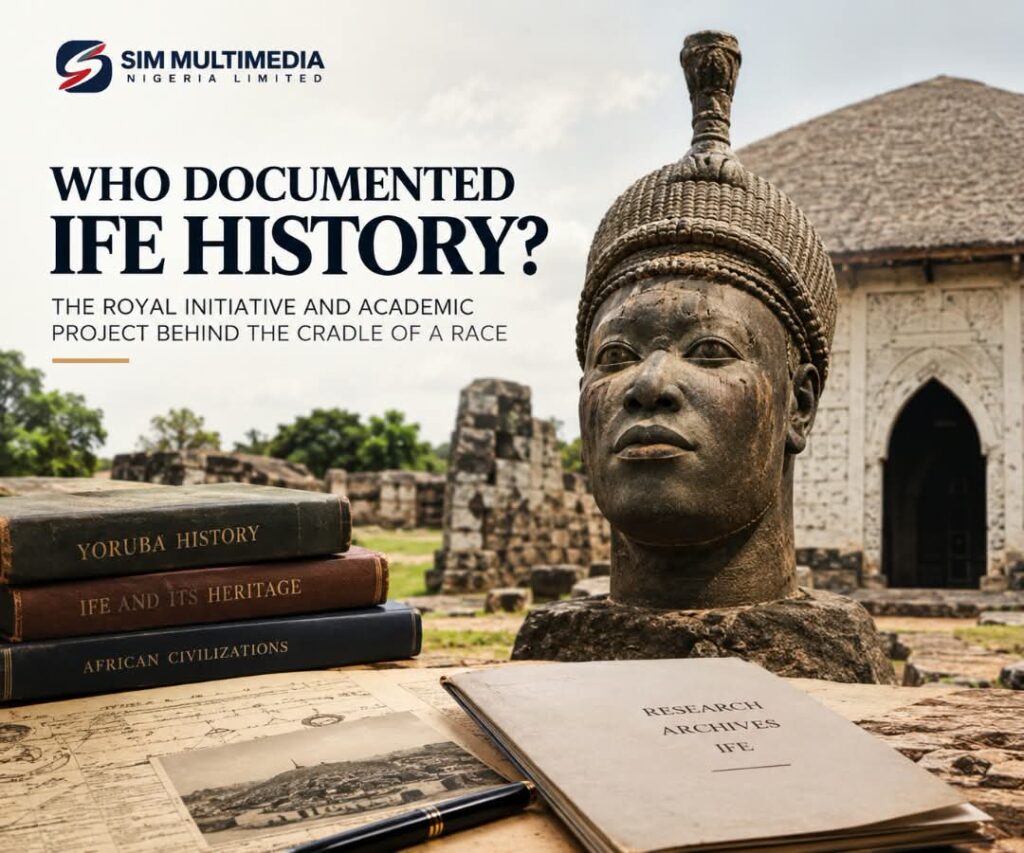
One of the most important accounts of this process appears in The Cradle of a Race: Ife from the Beginning to 1980, edited by Professor I. A. Akinjogbin and published by Sunray Publications in 1992.
Its introductory discussion documents the efforts of educated Ife indigenes, traditional institutions, regional research programmes and the University of Ife, now Obafemi Awolowo University. It also records the interest of the late Ooni Adesoji Aderemi in preserving Ife’s history and supporting specialised academic research.
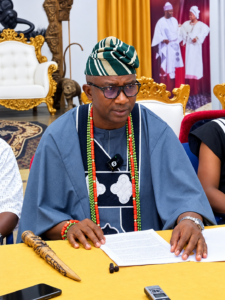
Decades later, Ooni Adeyeye Enitan Ogunwusi, Ojaja II, publicly renewed the call for more comprehensive documentation of Ile-Ife and Yoruba civilisation.
These historical developments deserve attention because they demonstrate that preserving a civilisation’s past requires more than celebrating tradition. It requires the deliberate collection, examination and preservation of historical evidence.
OONI ADESOJI ADEREMI: THE PALACE AS A CUSTODIAN OF HISTORICAL KNOWLEDGE
When Oba Adesoji Aderemi ascended the throne of Ile-Ife in 1930, the task of preserving the city’s history involved gathering knowledge from the families and traditional institutions that held important parts of its past.
According to the introductory discussion in The Cradle of a Race, Ooni Aderemi asked the ruling houses of Ife to furnish him with their family histories.
This was an important step towards assembling historical information from different custodians. No single individual or institution could reasonably be expected to possess every tradition concerning a city with such a long and complex past.
The book also discusses earlier attempts by educated Ife indigenes to investigate and record their traditions. Among the significant publications associated with these efforts was Prince J. A. Ademakinwa’s Ife, Cradle of the Yorubas, published in 1958.
The record therefore shows that the documentation of Ife history developed through the contributions of several people over many years. Royal initiative was important, but it formed part of a broader process involving families, writers, researchers and community knowledge.
1957: THE WESTERN REGION TAKES YORUBA HISTORICAL RESEARCH FORWARD
In 1957, the government of the Western Region established the Yoruba Historical Research Scheme under Dr S. O. Biobaku.
As described in the introductory discussion of The Cradle of a Race, the scheme formed part of the organised effort to investigate Yoruba history, including the collection and examination of traditions relating to Ile-Ife.
This development brought a more systematic research approach to the preservation of Yoruba history. Oral accounts could be collected, compared with written records and examined alongside other available evidence.
The significance of this effort extends beyond Ife. It demonstrates the importance of institutional support in preserving the historical knowledge of Yoruba communities.
1967: THE UNIVERSITY OF IFE STRENGTHENS THE DOCUMENTATION EFFORT
Following the relocation of the University of Ife to its permanent campus in January 1967, its Institute of African Studies sponsored a multidisciplinary research project on Yoruba history, funded by the university.
The introductory discussion records that knowledgeable Ife indigenes were encouraged to write and publish their knowledge of Ife and Yorubaland. Final-year history students were also encouraged to select Ife-related topics for their research essays.
This approach connected traditional knowledge with academic investigation.
Elders and community custodians possessed oral traditions that needed to be preserved, while students and professional scholars could investigate historical questions and examine the available evidence.
Researchers also recognised that some information about Ife might survive outside the city. Traditions preserved in other Yoruba communities could therefore contribute to a fuller understanding of Ife’s past.
The result was a research undertaking that required sustained effort across different disciplines and locations.
1971: OONI ADESOJI ADEREMI’S PROPOSED FELLOWSHIP FOR IFE HISTORY
One of the most significant details in the book’s introduction concerns Ooni Adesoji Aderemi’s renewed interest in the university’s research project.
According to the account, by 1971, the late Ooni was willing to endow a research fellowship specifically for Ife history. Various problems prevented him from carrying out that intention.
This detail is important because it documents his interest in supporting specialised historical research rather than relying exclusively on the preservation of oral traditions.
The evidence must nevertheless be stated precisely. The book documents the university research project, the Ooni’s interest and his proposed fellowship. It does not establish that he issued a formal order requiring every scholar at the university to write Ife history.
What the source does establish is that the late monarch recognised the importance of preserving Ife’s past and was willing to support a dedicated academic initiative.
FROM RESEARCH PAPERS TO THE CRADLE OF A RACE
By 1981, the researchers involved in the project believed that enough material had accumulated to organise a seminar on Ife history. Although the seminar did not take place as planned, some of the papers prepared for it were eventually incorporated into the published collection.
The resulting book, The Cradle of a Race: Ife from the Beginning to 1980, was published in 1992.
Its chapters address different dimensions of Ife’s history, including its environment, oral traditions, political development, economy, religious practices, government and administration.
The collection’s value lies in its collaborative approach. Rather than presenting history as the exclusive property of one narrator or institution, it brings together research from different scholars and preserves differences in interpretation where they exist.
That is a central principle of credible historical scholarship: claims must be examined, sources must be identified, and conclusions must remain open to scrutiny when further evidence becomes available.
The book was not the end of historical research into Ife. It was an important contribution to a continuing process of documenting, examining and preserving the city’s past.
OONI ADEYEYE OGUNWUSI: RENEWING THE CALL TO DOCUMENT IFE AND YORUBA CIVILISATION
The responsibility of documenting Ile-Ife’s history has continued to attract attention under later traditional leadership.
In October 2023, Ooni Adeyeye Enitan Ogunwusi, Ojaja II, called for more comprehensive documentation of Ile-Ife and Yoruba history. Reports published by Vanguard, Punch and The Guardian described his concerns about the amount of historical knowledge that remained undocumented and the need to preserve oral traditions.
His call was associated with the International Conference on Ile-Ife and Yoruba Civilisation: The Nexus between Tradition and Modernity, held in October 2023.
The conference brought scholars together to examine Ile-Ife and Yoruba civilisation and to discuss the preservation of historical and cultural knowledge.
The parallel with the earlier period is clear: historical knowledge must be collected, investigated and recorded if it is to remain accessible to future generations.
However, the historical record does not establish that the 2023 initiative was a direct institutional continuation of Ooni Aderemi’s proposed fellowship. The defensible comparison is that both initiatives reflect a concern for documenting and preserving Ife’s history, although they took place in different periods and under different circumstances.
THE MESSAGE FOR YORUBA HISTORY: PRESERVATION REQUIRES EVIDENCE
The experience of Ile-Ife offers a lesson to every Yoruba kingdom, town, palace, family and cultural organisation.
Traditional rulers can encourage research and support the preservation of oral traditions. Families can document genealogies and historical accounts. Universities can train researchers and undertake scholarly investigations. Archives and museums can safeguard documents, photographs and artefacts.
These responsibilities complement one another.
Historical disagreements should also be investigated rather than concealed. When different traditions offer competing accounts, researchers should identify their sources, examine their context and explain what the available evidence can and cannot establish.
This is how cultural heritage can be preserved without confusing inherited belief with independently verified historical fact.