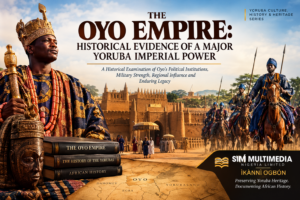


When the history of the Oyo Empire is discussed, attention often goes to its army, conquests and political authority. But another part of that history deserves equal attention: the towns, kingdoms and trading corridors that connected Oyo with the wider world.
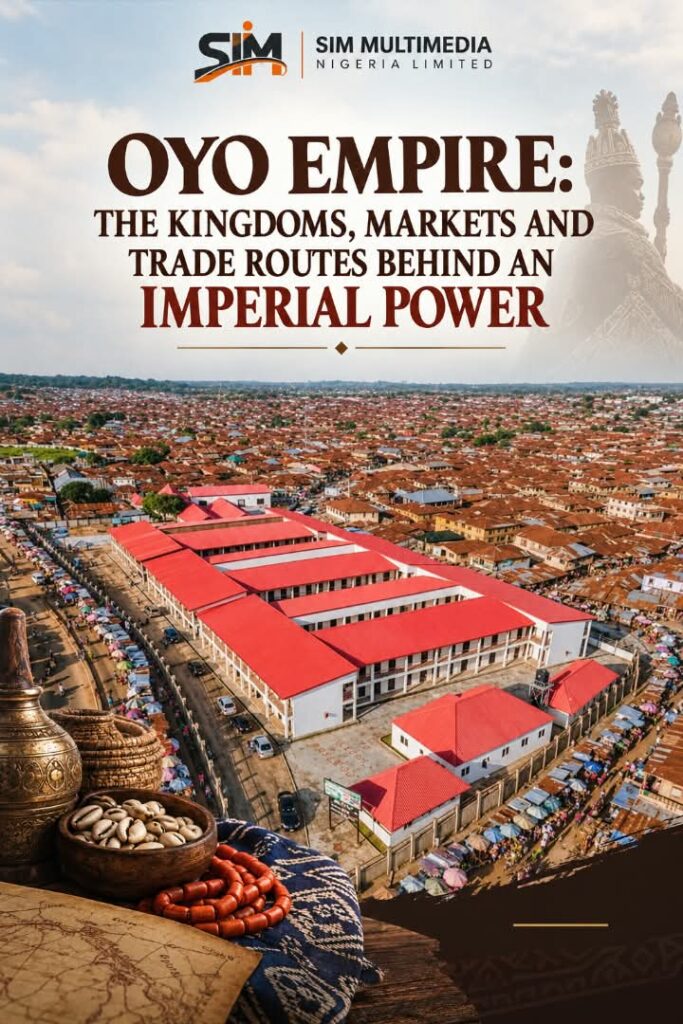
Historical research documents routes linking Old Oyo with Meko, Ketu and Porto Novo, as well as another corridor passing through Igbeji or Ipokia, Ilaro, Ijanna, Igan, Iseyin, Shaki, Igboho and Kishi before connecting northward towards Raba and Kano.
These were not merely names on a map. They were geographical points within a network connecting inland commerce with coastal and northern markets.
The history of Apomu and Owu provides an even more specific example. Historian Akinwumi Ogundiran explains how attacks on Oyo traders and travellers contributed to military intervention involving Oyo and Owu. Yet Owu also sought control of Apomu’s lucrative market, demonstrating that commercial protection and political ambition could operate together.
Oyo’s imperial system could protect its interests and help maintain access to important trading networks. But imperial authority also involved tribute, coercion, competition and warfare. The benefits and costs were not distributed equally among all communities.
The historical record therefore supports a serious conclusion: Oyo’s power was sustained not by military strength alone, but also by its relationships with territories, markets and commercial routes.
To understand that power, we must examine the evidence honestly—including the parts that celebrate political achievement and the parts that reveal the consequences of imperial expansion.
History is more than the story of who conquered whom. It is also the story of who controlled the routes, who traded in the markets, who collected the revenue and who bore the costs.